01
Configuration customization
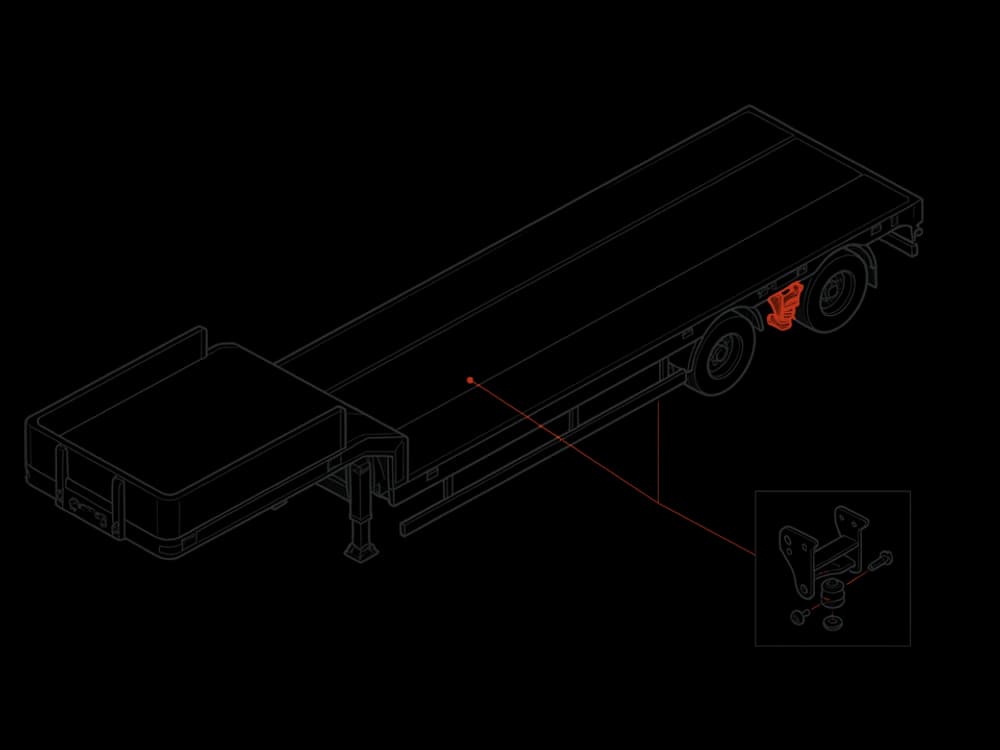
Select and integrate axles, suspension, tires, braking, lighting, colors and accessories around the required operating conditions.
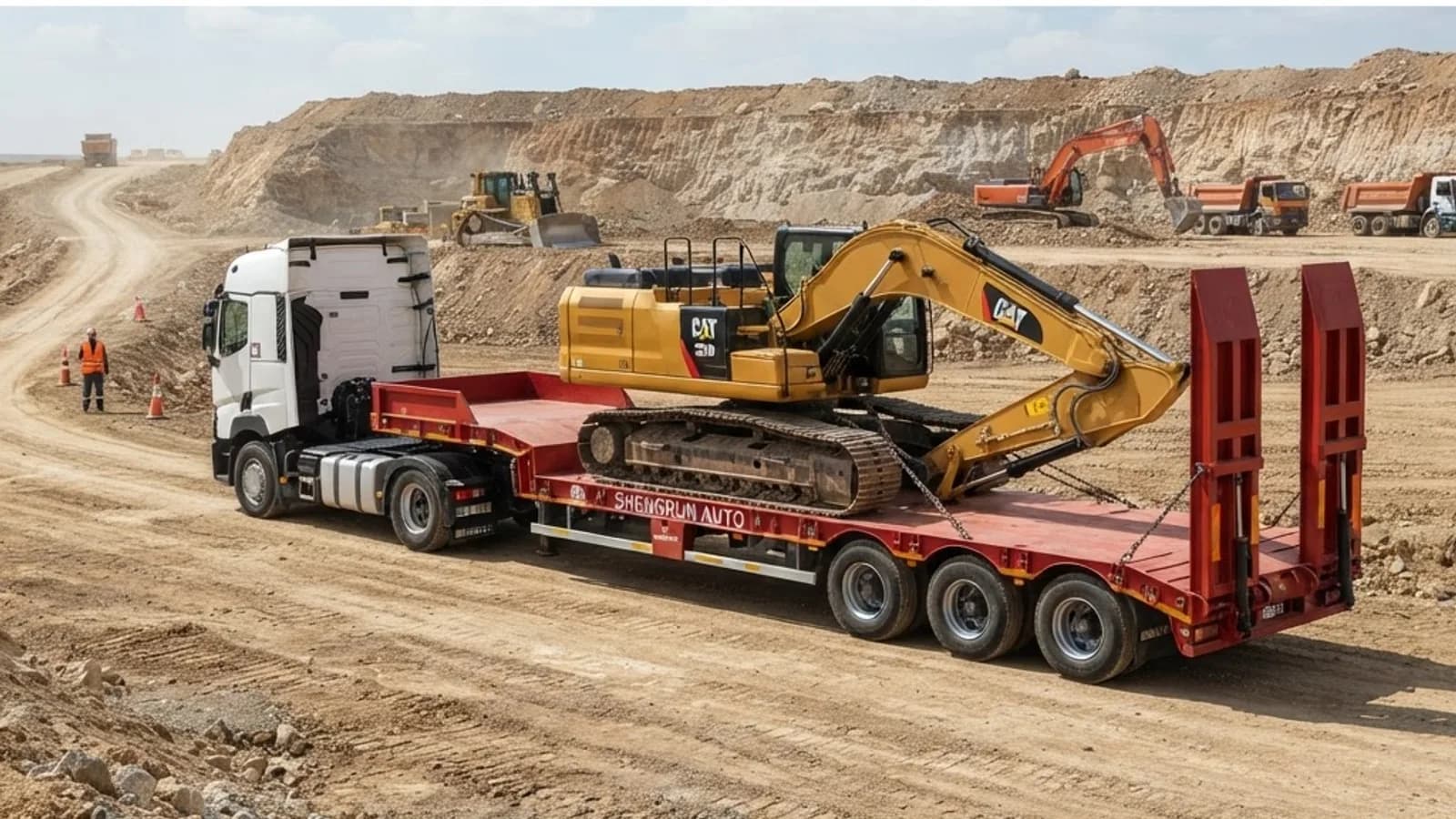
As a custom semi-trailer manufacturer, we engineer the vehicle around what you carry, where it operates and how it is loaded. Starting from one of 65 standard models, we adapt payload, dimensions, structure, running systems and equipment to the job and destination requirements.
65
Vehicle models
Reusable product and engineering resources—not a required starting point
15
Customization areas
Covering structure, running gear, functions and market adaptation
100+
Customizable specifications
Matched to cargo, operating conditions and destination requirements
735
Component families
Selectable across 18 complete vehicle systems
Select and integrate axles, suspension, tires, braking, lighting, colors and accessories around the required operating conditions.
Engineer payload, dimensions, frame, platform and operating functions as one vehicle system for the transport task.
Create a non-standard trailer from a transport brief, customer drawings, a reference unit or field information.
Requirement collection
Technical evaluation
Configuration and quotation
Specification and drawing confirmation
Production and inspection
Delivery and documentation
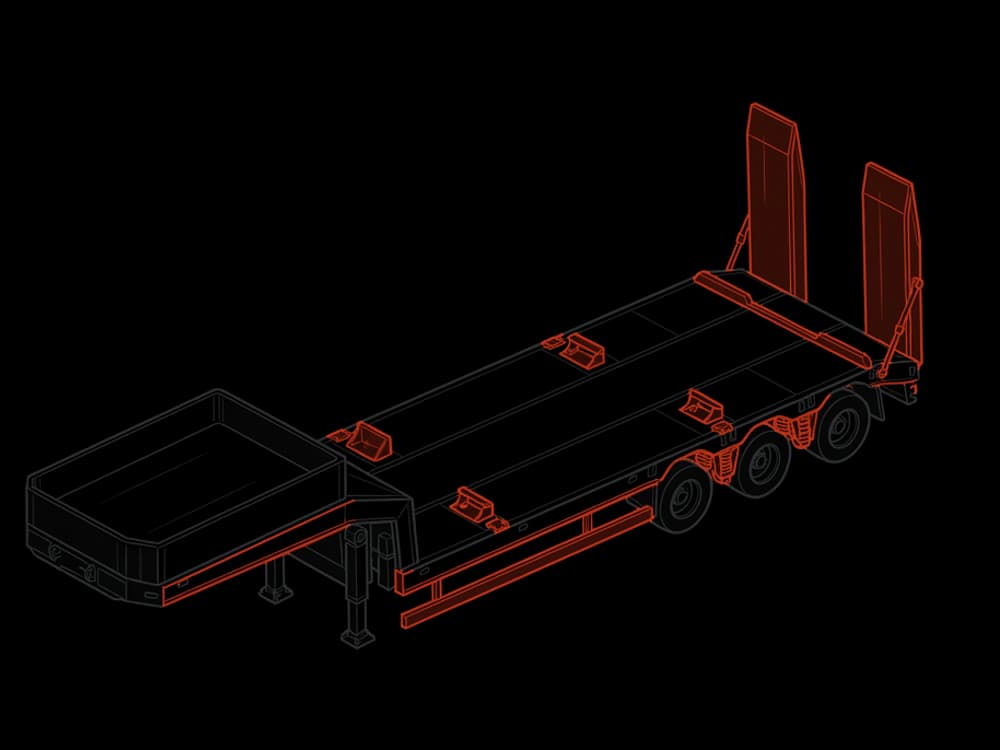
Sidewalls, posts, ramps and cargo supports can be removed when the next load needs an open platform.
Axle spacing, support positions and restraint points are matched to load distribution and operating practice.
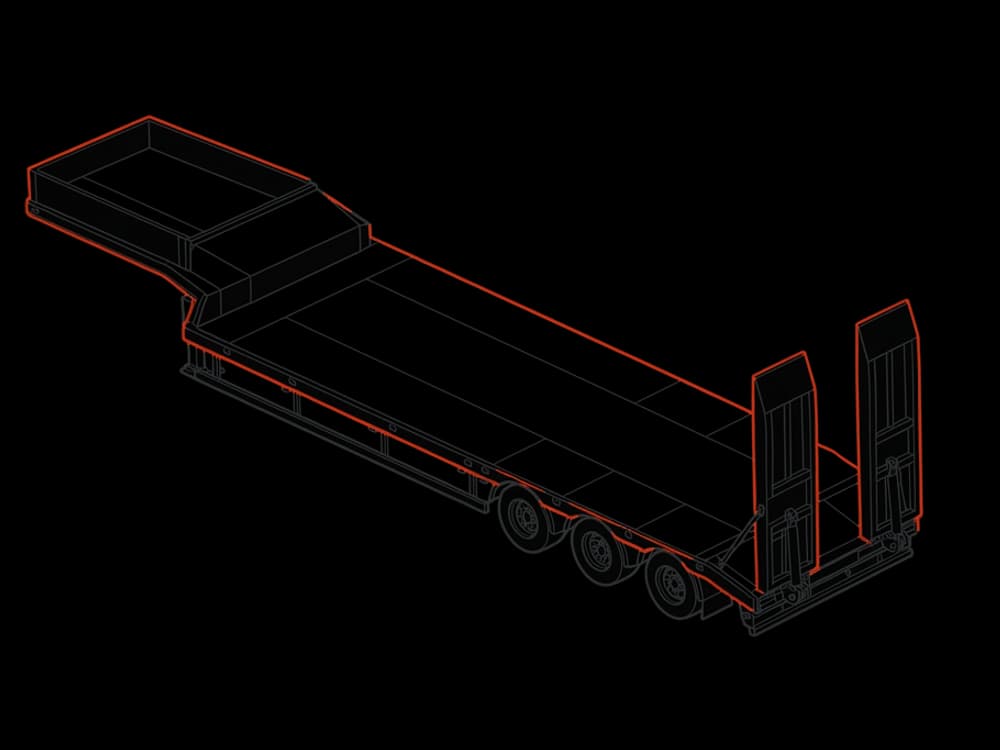
Telescopic platforms and beams provide extra length only when long cargo requires it.
Reserved mounting points let operators exchange equipment without rebuilding the base trailer.
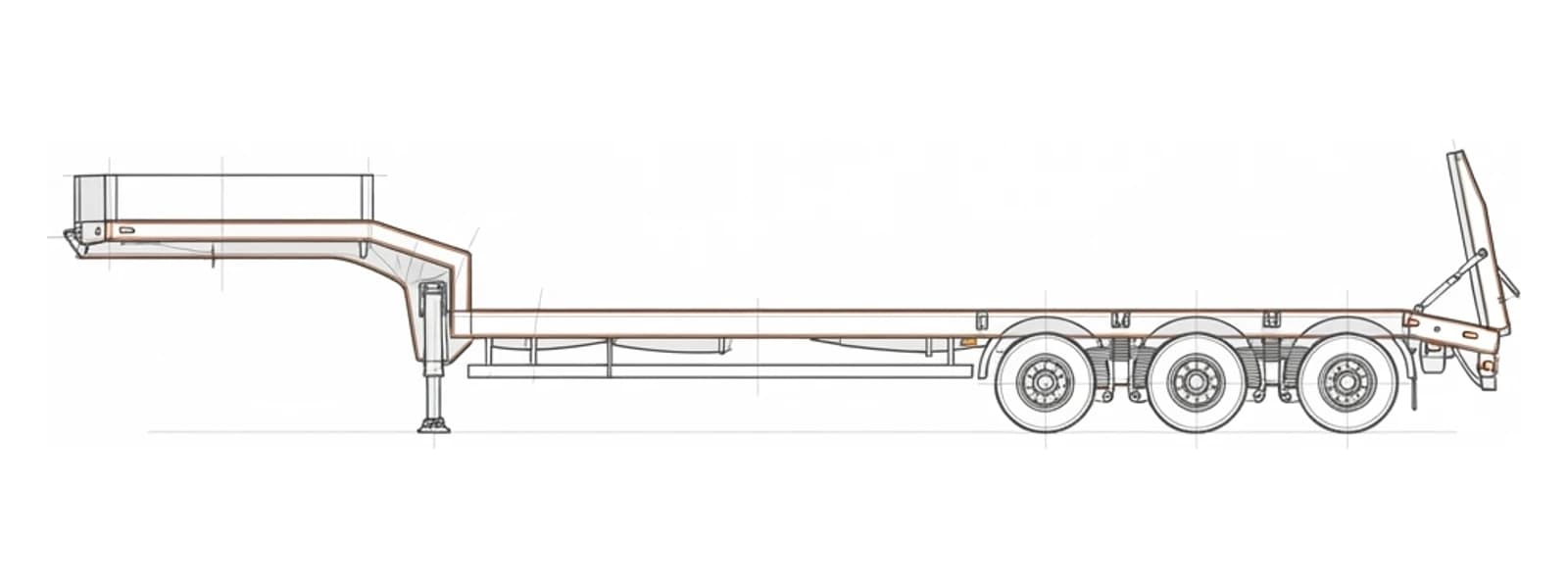
01 / Requirement input
03 / Engineering customization
15
Areas
100+
Specifications
| Customization area | Customizable parameter | Value and impact |
|---|---|---|
| M01Transport task & vehicle matching | M01-01Cargo / Medium Type | Vehicle type, materials, structure and safety systems |
| M01-02Cargo Form & Packaging | Load surface, containment and securing method | |
| M01-03Unit Cargo Dimensions | Deck, body, extension and overall dimensions | |
| M01-04Unit Weight & Total Load | Payload and structural strength | |
| M01-05Cargo Density / Required Volume | Body, tank or silo volume | |
| M01-06Centre of Gravity & Load Placement | Stability and load distribution | |
| M01-07Road, Terrain & Site Conditions | Suspension, mobility, steering and protection | |
| M01-08Tractor & Interface Requirements | Fifth-wheel height, kingpin, air and electrical connections | |
| M02Capacity & load distribution | M02-01Design Payload | Frame, axles, tires and braking |
| M02-02Tare Weight Target | Actual payload and operating efficiency | |
| M02-03Technical Gross Trailer Mass | Vehicle structural design limits | |
| M02-04Design Kingpin Load | Gooseneck, kingpin and tractor matching | |
| M02-05Design Axle-group Load | Axle count, wheelbase and suspension selection | |
| M02-06Design Load per Axle | Axle, tire and braking specifications | |
| M02-07Point / Concentrated Load | Main beams, cross members and local reinforcement | |
| M02-08Floor / Deck Load Rating | Floor material, thickness and cross-member spacing | |
| M03Vehicle dimensions & geometry | M03-01Overall Length | Load capacity, regulations and turning |
| M03-02Overall Width | Cargo fit, regulations and clearance | |
| M03-03Overall Height | Height limit, stability and internal space | |
| M03-04Wheelbase | Load distribution and turning radius | |
| M03-05Axle Spacing | Axle-group loading and regulatory compliance | |
| M03-06Fifth-wheel Height | Tractor matching and body level | |
| M03-07Loading Deck Height | Loading gradient and overall transport height | |
| M03-08Minimum Ground Clearance | Unpaved-road and site trafficability | |
| M03-09Turning Radius & Swept Path | Urban, port and worksite maneuverability | |
| M04Chassis & structural engineering | M04-01Chassis Architecture | Base forms: flatbed, gooseneck, lowbed, modular |
| M04-02Main Chassis Material Grade | Strength, tare weight and durability | |
| M04-03Main Beam Section & Height | Bending capacity and deck height | |
| M04-04Top Flange Dimensions | Main-beam compression and overall strength | |
| M04-05Web Thickness | Shear capacity and local stability | |
| M04-06Bottom Flange Dimensions | Tensile capacity and fatigue life | |
| M04-07Crossmember Material & Section | Floor bearing and lateral stiffness | |
| M04-08Crossmember Spacing & Layout | Concentrated loads and floor deflection | |
| M04-09Local Reinforcement & Joint Design | Service life of gooseneck, suspension, legs and load points | |
| M05Axle system | M05-01Number of Axles / Axle Lines | Load bearing, axle load and turning |
| M05-02Axle Brand | Market preference, service and spare parts | |
| M05-03Axle Model | Load bearing, braking and interfaces | |
| M05-04Technical Capacity per Axle | Load capacity and safety margin | |
| M05-05Axle Construction Type | Rigid, drop, cranked, swing or independent structure | |
| M05-06Axle Track | Stability, width and tire arrangement | |
| M05-07Axle Position & Bogie Layout | Load distribution and handling | |
| M05-08Wheel-end Interface & Maintenance Concept | Hubs, bearings, lubrication and maintenance interval | |
| M06Suspension & steering | M06-01Suspension Type | Mechanical, air, single-point, bogie or hydraulic solution |
| M06-02Suspension Brand & Model | Load bearing, service and spare parts | |
| M06-03Suspension Rating | Axle-group loading and durability | |
| M06-04Design Ride Height | Body level, deck height and trafficability | |
| M06-05Spring / Airbag Specification | Comfort, load bearing and road-condition adaptation | |
| M06-06Raise / Lower Travel | Loading, obstacle clearance and leveling | |
| M06-07Steering System | Self-tracking, forced, hydraulic or mechanical steering | |
| M06-08Steering Angle, Lock & Return | Turning space and high-speed stability | |
| M07Tyres & rims | M07-01Tyre Size | Load bearing, deck height and trafficability |
| M07-02Ply Rating / Load Index | Single-tire capacity and safety margin | |
| M07-03Speed Rating | Operating speed and temperature rise | |
| M07-04Tread Pattern & Application | Road, mine, gravel and mud performance | |
| M07-05Single / Twin Tyres & Quantity | Load bearing, tare weight and maintenance cost | |
| M07-06Rim Size & Material | Tire matching, tare weight and durability | |
| M07-07Spare Tyres & Carrier Location | Range, maintenance and space layout | |
| M08Coupling & support | M08-01Kingpin Size & Standard | Compatibility with the fifth wheel |
| M08-02Kingpin Position | Front swing clearance and load distribution | |
| M08-03Kingpin Mounting / Flange Type | Structural strength and maintenance | |
| M08-04Coupling Height | Tractor matching and vehicle attitude | |
| M08-05Landing Gear Brand & Model | Operation, service and procurement standards | |
| M08-06Landing Gear Capacity & Mounting Height | Static support and ground clearance | |
| M08-07Foot, Crank & Connecting Shaft | Ground adaptation and ease of operation | |
| M09Braking & pneumatics | M09-01Drum / Disc Brakes | Braking performance, maintenance and cost |
| M09-02Brake Size | Heat capacity and braking force | |
| M09-03ABS / EBS Architecture | Regulations, safety and tractor compatibility | |
| M09-04Sensor / Modulator Configuration | Multi-axle control and stability | |
| M09-05Brake Valve Brand & Model | Market preference, service and functions | |
| M09-06Brake Chamber / Actuator | Braking force and parking capability | |
| M09-07Air Reservoir Capacity & Layout | Response, space and regulations | |
| M09-08Air Couplings, Hoses & Lines | Tractor interface and environmental resistance | |
| M09-09Stability, Lift-axle & Wear Functions | RSS, traction assist and maintenance alerts | |
| M10Electrical, lighting & smart systems | M10-01System Voltage | Tractor and auxiliary-equipment compatibility |
| M10-02Electrical Sockets & Pin Standard | Tractor interface and regional standards | |
| M10-03Lamp Type & Brand | Visibility, durability and service | |
| M10-04Lighting Quantity & Layout | Local regulations and vehicle dimensions | |
| M10-05Work, Reversing & Warning Lights | Night operation and loading safety | |
| M10-06Harness, Sealing & Connector Rating | Rain, dust and corrosive environments | |
| M10-07Camera & Reversing Assistance | Blind spots and site operation safety | |
| M10-08Telematics & Condition Monitoring | Positioning, tire pressure, axle load, temperature and door status | |
| M11Deck, body & cargo space | M11-01Internal / Usable Length | Cargo and pallet arrangement |
| M11-02Internal / Usable Width | Cargo arrangement and side clearance | |
| M11-03Internal / Usable Height | Volume and overall transport height | |
| M11-04Deck / Floor Material | Strength, anti-slip, cleaning and durability | |
| M11-05Deck / Floor Thickness | Concentrated loads and service life | |
| M11-06Body / Vessel Profile | Volume, center of gravity, discharge and cleaning | |
| M11-07Sidewall, Fence or Stake Height | Cargo containment and loading volume | |
| M11-08Sidewall, Door, Roof or Curtain Operation | Side, rear, crane loading and handling efficiency | |
| M11-09Lining, Sealing & Internal Finish | Leak prevention, wear resistance, hygiene and cargo protection | |
| M12Loading, unloading & hydraulics | M12-01Extension Type & Range | Over-length cargo and overall vehicle length |
| M12-02Deck Widening System & Range | Over-width equipment and transport-mode switching | |
| M12-03Loading Ramp Type | Mechanical, spring, hydraulic or removable form | |
| M12-04Ramp Dimensions & Loading Angle | Equipment trafficability and grounding | |
| M12-05Ramp Rating & Surface | Loading safety for wheeled and tracked equipment | |
| M12-06Tipping / Discharge Direction & Angle | Rear, side discharge and unloading efficiency | |
| M12-07Hydraulic Cylinder Brand, Model & Stroke | Lifting capacity, speed and stability | |
| M12-08Pump, PTO & Power Pack | Tractor matching and standalone operation | |
| M12-09Hydraulic Pressure, Control & Emergency Operation | Safety, reliability and on-site operation | |
| M13Cargo securement & operational equipment | M13-01Number of Lashing Points | Available securing points and loading flexibility |
| M13-02Lashing Layout & Spacing | Different cargo and loading combinations | |
| M13-03Lashing-point Rating | Cargo securing safety | |
| M13-04Container Compatibility & Twist-lock Layout | 20/30/40/45 ft and other combinations | |
| M13-05Stakes, Stanchions & Pockets | Anti-roll for pipes, timber and long materials | |
| M13-06Coil Well, Wheel Recesses & Chocks | Positioning of coils, machinery and vehicles | |
| M13-07Ferry Lashings & Intermodal Lifting Features | Sea, rail and intermodal operations | |
| M13-08Toolboxes, Spare Carriers & On-board Equipment | Maintenance, storage and on-site work | |
| M14Materials, finish & environmental protection | M14-01Body / Vessel Material & Grade | Weight, strength, corrosion and medium compatibility |
| M14-02Wear, Corrosion or Food-grade Lining | Service life, cleaning and cargo safety | |
| M14-03Blasting & Surface Preparation | Coating adhesion and durability | |
| M14-04Galvanising, Coating System & DFT | Anti-corrosion life and repair interval | |
| M14-05Colour, Marking & Branding | Brand identity and fleet management | |
| M14-06Heat, Cold, Moisture, Dust & Salt Protection | Regional environment and operating reliability | |
| M15Market compliance & application systems | M15-01Destination Market & Operating Context | Applicable regulations and design limits |
| M15-02Legal Mass, Axle-load & Dimension Limits | Legal operation and load schemes | |
| M15-03Braking Regulation / Approval | ABS, EBS and braking configuration | |
| M15-04Lighting & Conspicuity Requirements | Lamp position, count and markings | |
| M15-05Mechanical Coupling Standard | Kingpin, connector and combination compatibility | |
| M15-06Side Guard, Rear Guard & Mudguard Requirements | Road safety and certification | |
| M15-07Homologation, Documentation & Marking | Registration, customs clearance and delivery | |
| M15-08Dangerous-goods Class, Tank Code & Compatibility | Tank material and safety systems | |
| M15-09Tank Volume, Compartments & Baffles | Distribution method, stability and loading | |
| M15-10Tank Pipework, Valves, Pumping & Metering | Handling efficiency and metered delivery | |
| M15-11Tank Pressure, Temperature, Insulation, Heating & Cleaning | Chemical, food and bitumen transport | |
| M15-12Overfill, Emergency Shut-off, Vapour Recovery & Pressure Protection | Personnel, environmental and dangerous-goods safety | |
| M15-13Refrigeration Range, Zones, Unit & Recording | Cold-chain stability and traceability | |
| M15-14Silo Volume, Aeration, Filtration & Pneumatic Discharge | Cement, powder and granular material discharge | |
| M15-15Tipper Body, Volume, Hoist & Tailgate | Ore, gravel, coal and construction materials | |
| M15-16Vehicle / Livestock Decks, Lifts, Ventilation & Water Systems | Vehicle loading or animal transport conditions | |
| M15-17Heavy-haul, Modular, Terminal, Municipal & Recovery Systems | Special transport and on-site operation capability |
100+ specifications represent the maximum range across all vehicle types. Model- and market-specific items appear only when applicable; component families are selected and integrated for each confirmed solution.
Tell us the cargo, country and basic operating conditions. You do not need to finish the technical specification yourself.
Have a drawing or reference image? Send it by replying to our first email or directly through WhatsApp.