Ten stages. Your unit is signed off at each one before it moves to the next.
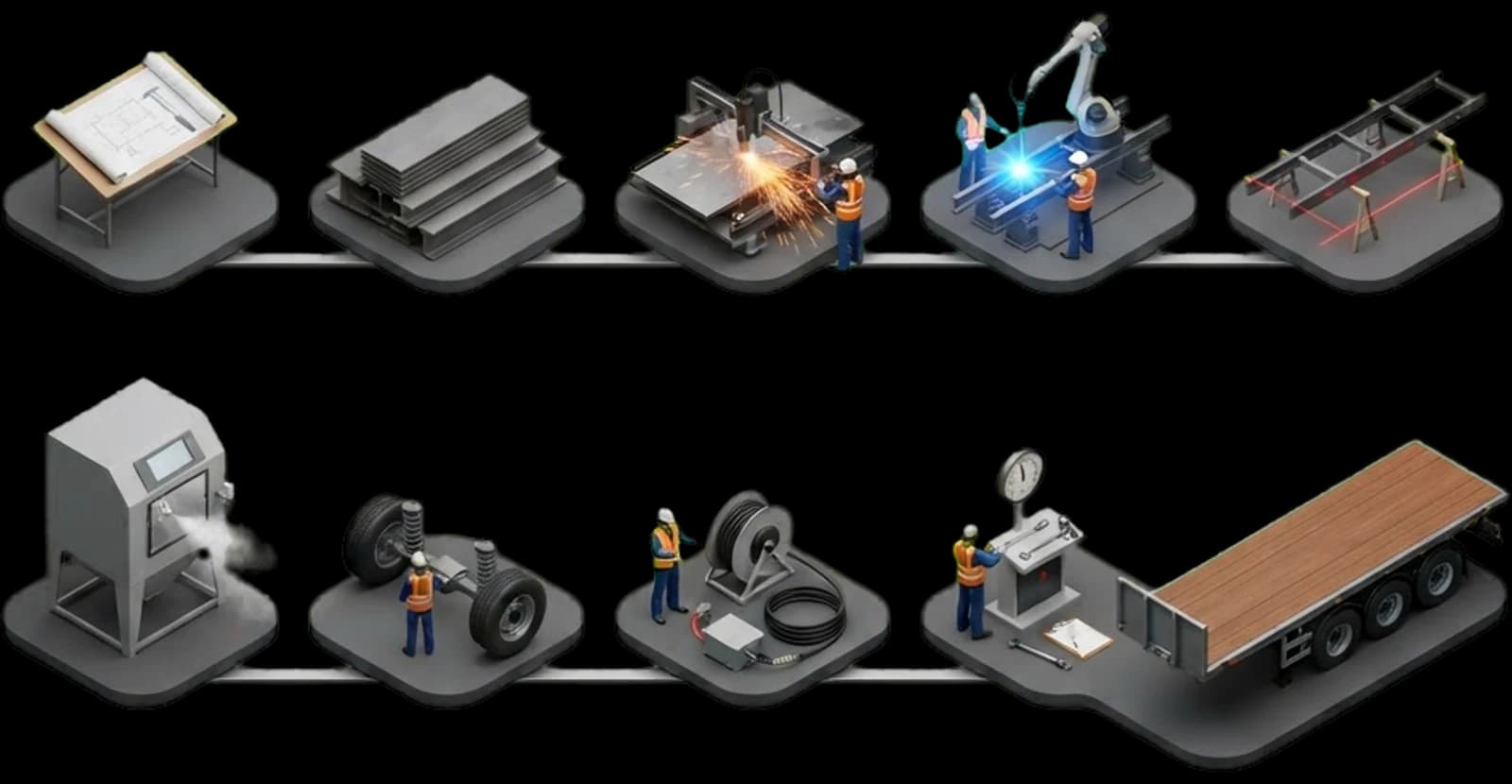
- 01Custom design
- 02Material
- 03Cutting
- 04Welding
- 05Correction
- 06Coating
- 07Running gear
- 08Electrics and brakes
- 09Inspection
- 10Dispatch
 01/ 10
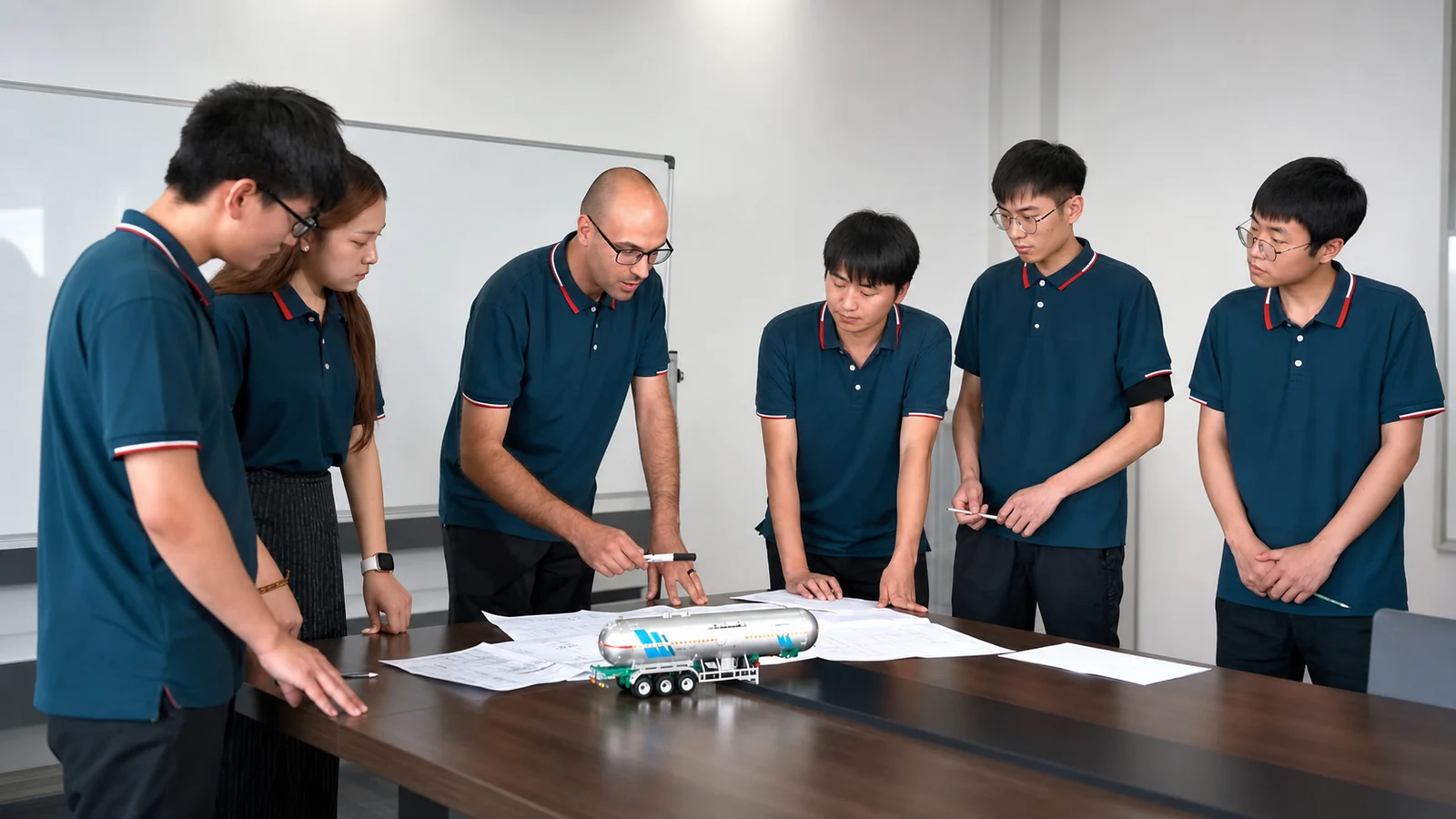
Custom design
- In-house engineers confirm payload, dimensions, axle layout and market requirements with you before anything is cut
- The approved drawing then controls both production and inspection, so what is checked at the end is what you signed at the start
 02/ 10
Raw materials
- Structural steel selected for the load and application you specified, not to whatever grade is cheapest that month
- Grade, thickness and mill certificates verified before production, with material issued by heat number so your chassis stays traceable to its cast
 03/ 10
Cutting and forming
- CNC laser, plasma cutting and large-scale forming equipment in house, so plate goes from raw to formed without leaving the plant
- Digital production data drives every cut, so the same part repeats to the same dimension across a whole batch and reaches the jigs already square
 04/ 10
Welding
- Automated submerged-arc, MIG and TIG welding, so structures and materials are each welded by the process that suits them rather than one process used for everything
- Dedicated fixtures hold the geometry and weld inspections verify the strength, so a repeat order is built to the same geometry as the first one you bought
 05/ 10
Frame correction
- Every frame is corrected after welding to restore the designed geometry, because welding always pulls steel -- and it is done before coating, since a twist sealed under paint is permanent
- Straightness, diagonals and mounting references are measured before assembly, which is what makes a trailer track straight instead of scrubbing the tyres on one side
 06/ 10
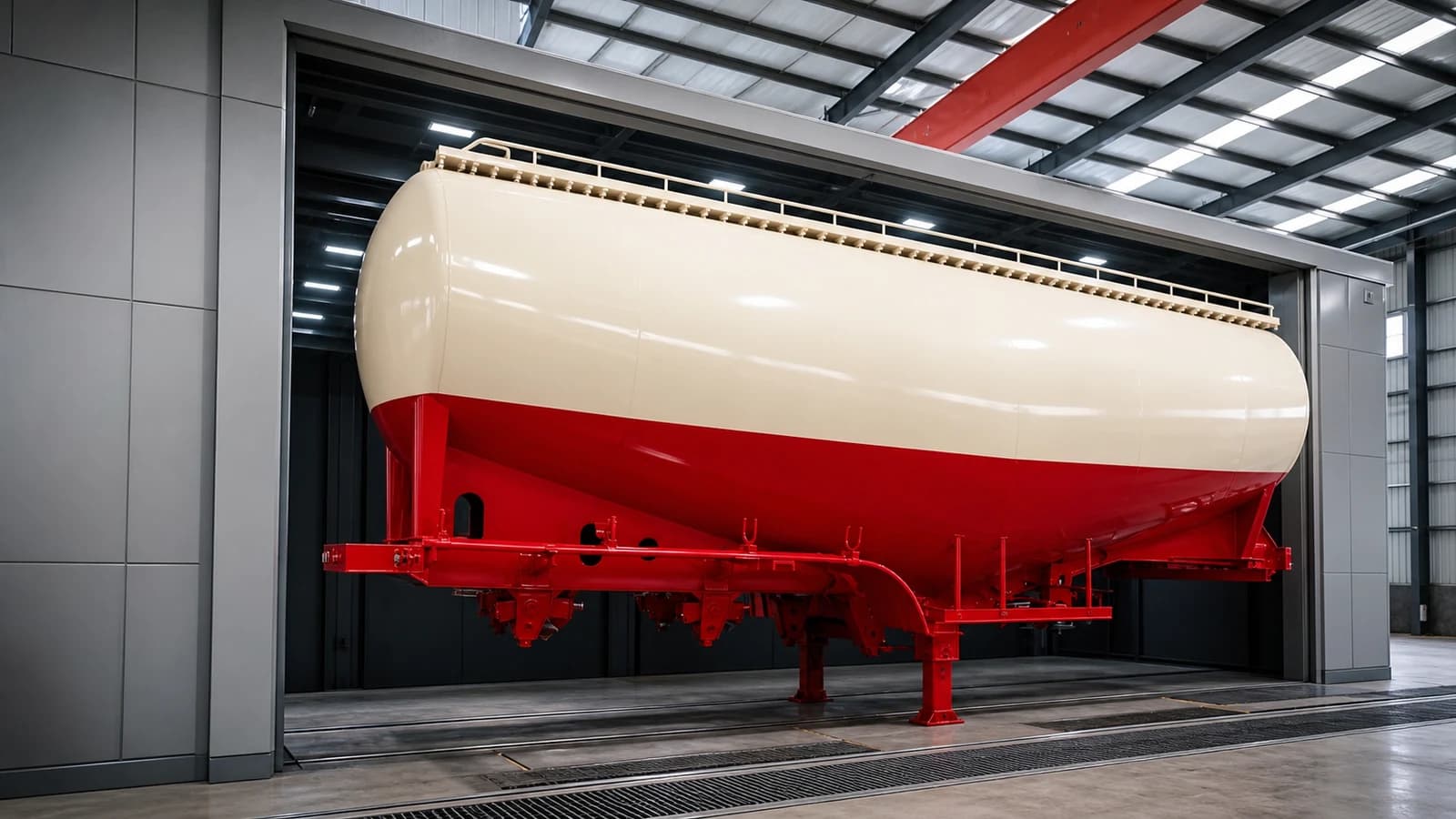
Shot blasting and coating
- Through-type shot blasting and a 21-metre spray-and-bake booth treat the frame whole, never in sections -- sectional painting is what produces colour steps and first-year edge rust
- Coating thickness, adhesion and finish are inspected, so the protection is verified rather than assumed from the fact that paint was applied
 07/ 10
Axle and suspension assembly
- Mechanical, air and single-point suspension configurations are all available, so the running gear is matched to your roads instead of to one standard build
- Axle position, fastening and alignment are controlled during assembly, and mounts are Huck-fastened rather than site-welded, so they stay inspectable and replaceable years later
 08/ 10
Electrical and braking systems
- Sealed LED lighting, moulded harnesses and dual-circuit electrical systems, routed to a drawing rather than zip-tied along a beam -- the failure a driver finds on the road, not one we find in the yard
- Established braking components with optional ABS, built to your destination market's regulations rather than to one domestic standard left for you to correct
 09/ 10
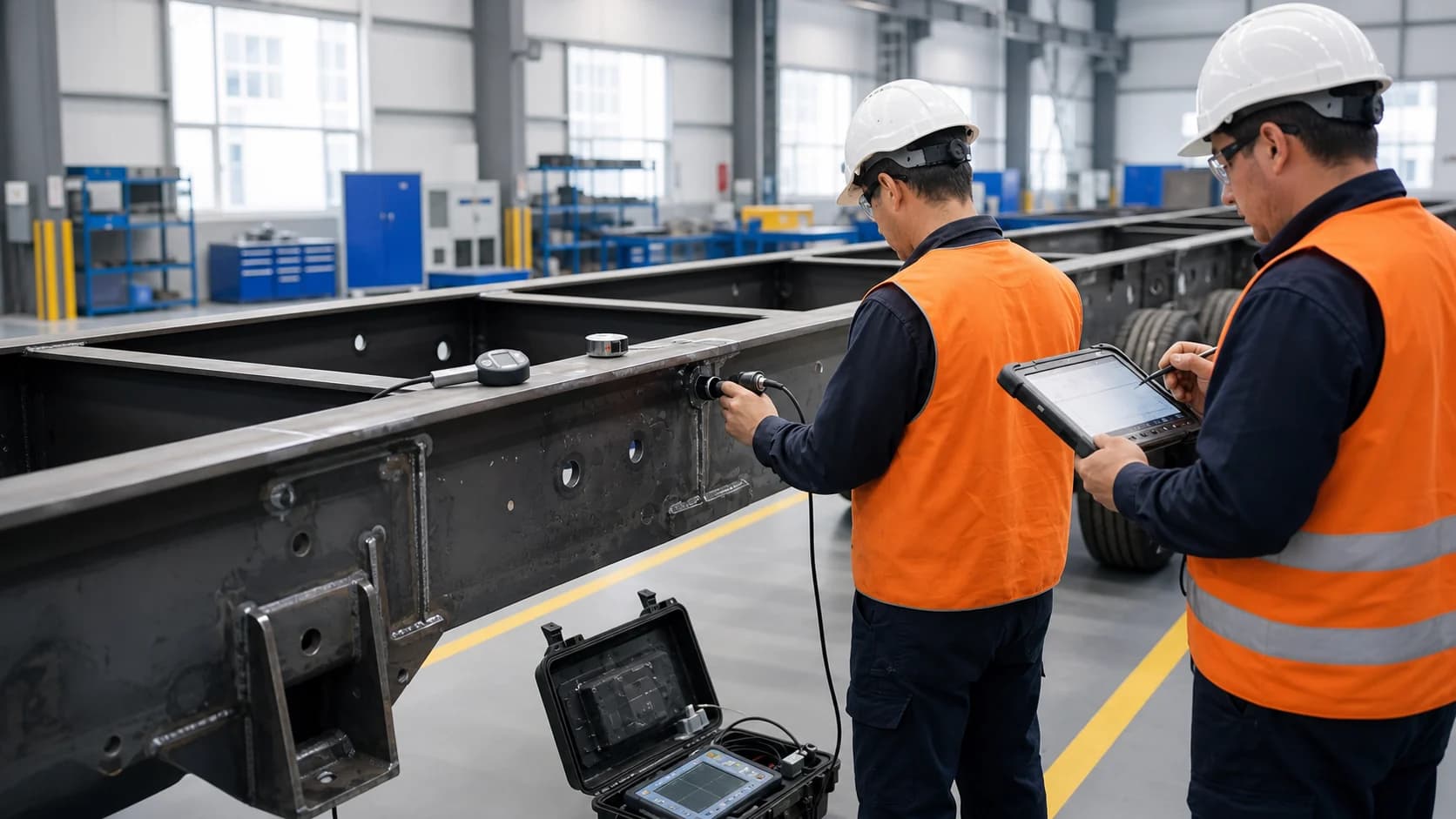
Inspection
- More than 400 sets of testing equipment cover material, weld and finished-vehicle inspection, so verification does not depend on sending work out
- Quality control covers 170 finished-vehicle checks and 345 component checks, applied to every unit rather than to one sample from the batch
 10/ 10
Dispatch
- Configuration, accessories, markings and documents are all verified before shipment, with export paperwork prepared in house so a customs query is answered by the people who built the unit
- Protection, securing and loading are arranged for each product and shipping method -- driven to port on their own running gear, or knocked down to CKD/SKD to cut your freight cost per unit
The conditions behind these stages
The site and the workshops, the lines and the machines on them, annual capacity and the approvals.
A question about one of these stages?
Tell us which stage matters to you. We can send the welding procedures, the in-process inspection records, or photographs of units currently on the line.