Selection guide
Axle load limits decide the trailer, not the payload you asked for
Buyers specify a payload. Registration authorities specify a load per axle. The two meet in axle count, axle spread and deck height, and getting that wrong turns into a permit for every trip.
Updated
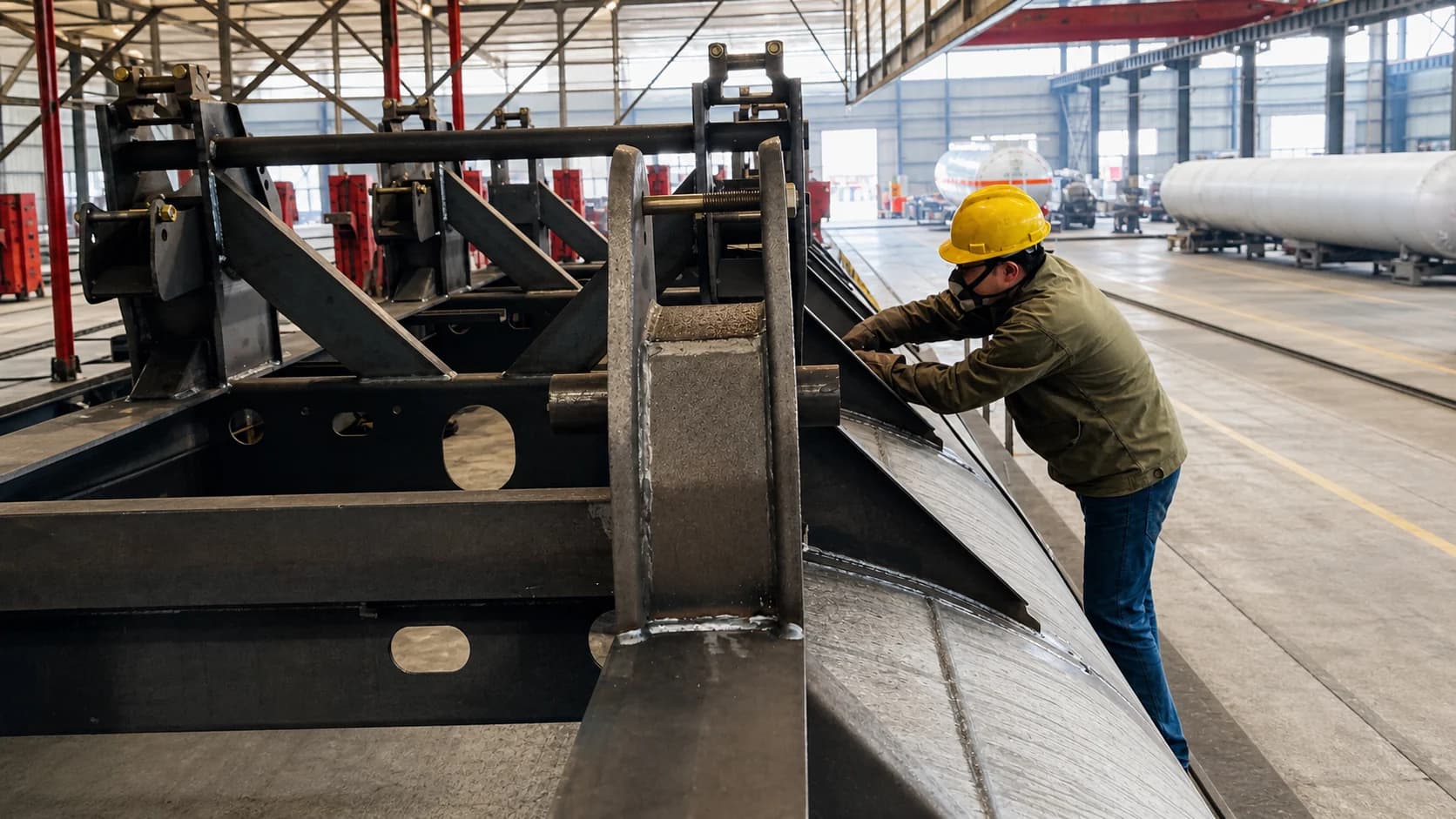
A payload figure is not a specification
"80 tonnes" tells us what you want to move. It does not tell us whether your route will let you move it on three axles or six, because the binding constraint is almost never the strength of the structure — it is the maximum load the authority allows on each axle and on each axle group, and that number is set locally.
The same load therefore produces different trailers in different countries, and a unit specified against the wrong limit is not a unit that can be fixed later. Axle count, axle spread and deck height are structural; they are set when the frame is built.
The cost of getting it wrong is per trip
A trailer that exceeds the local axle-load limit when loaded is still usable — under a special permit, applied for each time it runs. That is not a one-off cost that can be written off against the purchase; it is an operating cost, plus a scheduling constraint, for the whole life of the unit. Designing to stay inside the permit-free limit is usually cheaper than the equipment saving that pushed it outside.
For heavy haul this is why the category splits the way it does. A fixed lowbed, a detachable gooseneck, a hydraulic-steered multi-axle low-loader and modular equipment are four answers to the same question of how to spread a load across enough axles while keeping the deck low enough to clear the route.
Axle brand is a parts question, not a capacity question
We build with BPW and FUWA axles, JOST coupling equipment and WABCO braking. At the ratings we quote, any of these carries the load. What differs is what happens in year four, in your country: which brand a local workshop already stocks, and which one your fleet's existing units are already running. Tell us what your fleet runs and we will match it rather than argue for a substitution.
What we need from you, and what it constrains
| What you tell us | What it fixes on the trailer | If it is missing |
|---|---|---|
| Country of registration | Axle count and axle group spacing | We size to a limit that may not be yours |
| Maximum legal load per axle on the route | Whether the loaded unit needs a permit at all | A permit per trip becomes an operating cost |
| Lowest overhead clearance on the route | Deck height, and therefore wheel and suspension choice | The combination may not clear the route loaded |
| Tractor make, model and fifth-wheel height | Kingpin height and how load splits front to rear | Load can sit outside the axle limits even at correct total weight |
| Axle and brake brands already in your fleet | Which supplier we build with | Your workshop stocks parts for a brand you do not have |
From a delivered order
80 t lowbed with hydraulic ramps. Deck height and axle spread were set against the local axle-load limit, so the loaded combination stays inside the permit rather than needing one per trip.
Categories covered
- Low-bed Semi-trailers
- Detachable Gooseneck Lowboy Trailers
- Hydraulic-steered & Multi-axle Low-loaders
- Modular Heavy Transport Equipment
- Tipper Semi-trailers
These guides describe how we configure equipment and are written by the manufacturer. They are not a substitute for your own registration check: axle-load limits, dimensions and pressure-vessel acceptance are set by the authority in the country of registration, and we confirm them per order rather than in a published page.