Selection guide
Skeletal chassis or flatbed: which to buy for container work
Both carry a container. The choice is decided by whether the unit will ever carry anything else, and by how much payload the route leaves you.
Updated
The container is not what separates them
A skeletal chassis is a frame with twist locks and nothing between them. A flatbed is a continuous deck that also has twist locks. Both will lock a container down and both will carry it legally, so a specification sheet comparison of the two tends to end in a tie.
The difference shows up in the two things a specification sheet does not put side by side: the deck the flatbed carries is weight you paid for and then haul empty on every container trip, and the deck is also the reason the flatbed can take a load that has no corner castings at all.
Start from the return leg, not the outbound one
Port shuttle work in both directions is the clearest case for a skeletal chassis: the container is the only load the unit will ever see, and the tare saving converts directly into payload inside the same gross weight. Terminal-only movement is a further step in the same direction, which is why terminal chassis are a separate category rather than a variant.
If the return leg is steel, machinery, bagged goods or anything loose, the flatbed is not the compromise choice — it is the only one of the two that can run loaded both ways. One flatbed running full in both directions beats two units each running empty half the time, and that arithmetic usually settles the question before tare weight gets a vote.
The import route can outweigh both
A skeletal frame with no deck is the easier of the two to break down and pack, which matters where the tariff treats a knocked-down import differently from a complete vehicle. That is a customs question rather than an engineering one, and it is worth asking before the configuration is fixed, because it changes how the unit is built and marked, not just how it is boxed.
What each condition points to
| If this describes the route | Skeletal chassis | Flatbed |
|---|---|---|
| Containers only, both directions | Lower tare, so more payload at the same gross weight | Carries a deck it never uses |
| Container out, general cargo back | Cannot take the return load | The only one that can run loaded both ways |
| Payload-limited by axle load, not by volume | Every kilogram of tare saved is payload gained | Deck weight comes off the payload |
| Mixed 20 ft, 40 ft and 45 ft traffic | Extendable and multi-position lock layouts are standard practice here | Possible, but the deck adds weight the flexibility does not need |
| Imported knocked down for local assembly | Frame without a deck is the simpler unit to pack and reassemble | Deck panels become their own packing and marking problem |
From a delivered order
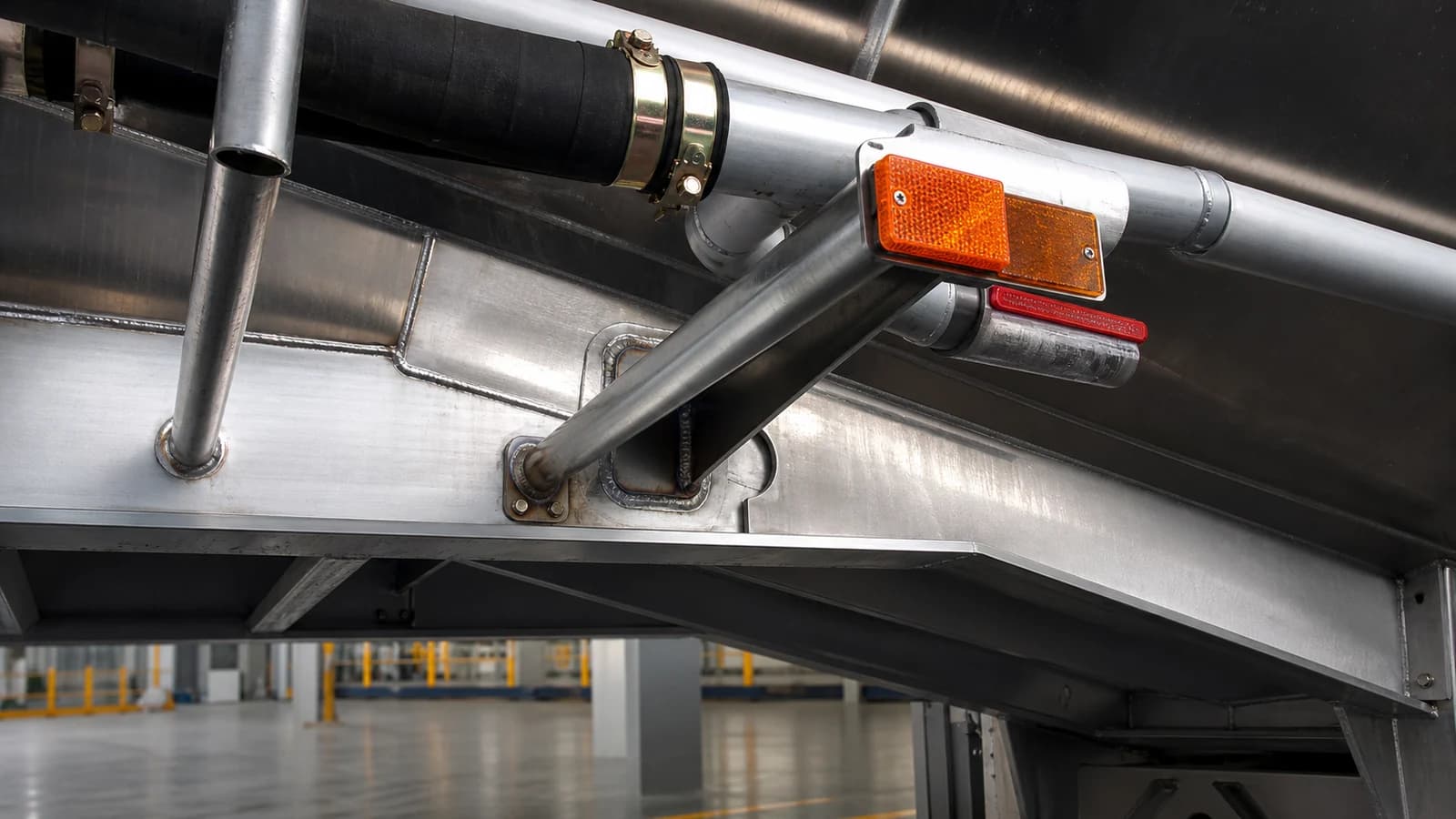
40 ft skeletal container chassis, 3 axles. Shipped as CKD to use the local assembly duty rate, with lighting and reflective marking built to the Chilean registration standard before packing — the marking had to be right before the crate was closed, not after arrival.
Categories covered
These guides describe how we configure equipment and are written by the manufacturer. They are not a substitute for your own registration check: axle-load limits, dimensions and pressure-vessel acceptance are set by the authority in the country of registration, and we confirm them per order rather than in a published page.