Selection guide
Choosing a tanker by the product it carries, not by its volume
Volume is the last decision, not the first. The cargo sets the pressure rating, the shell material, the discharge system and the code the vessel has to be stamped to.
Updated
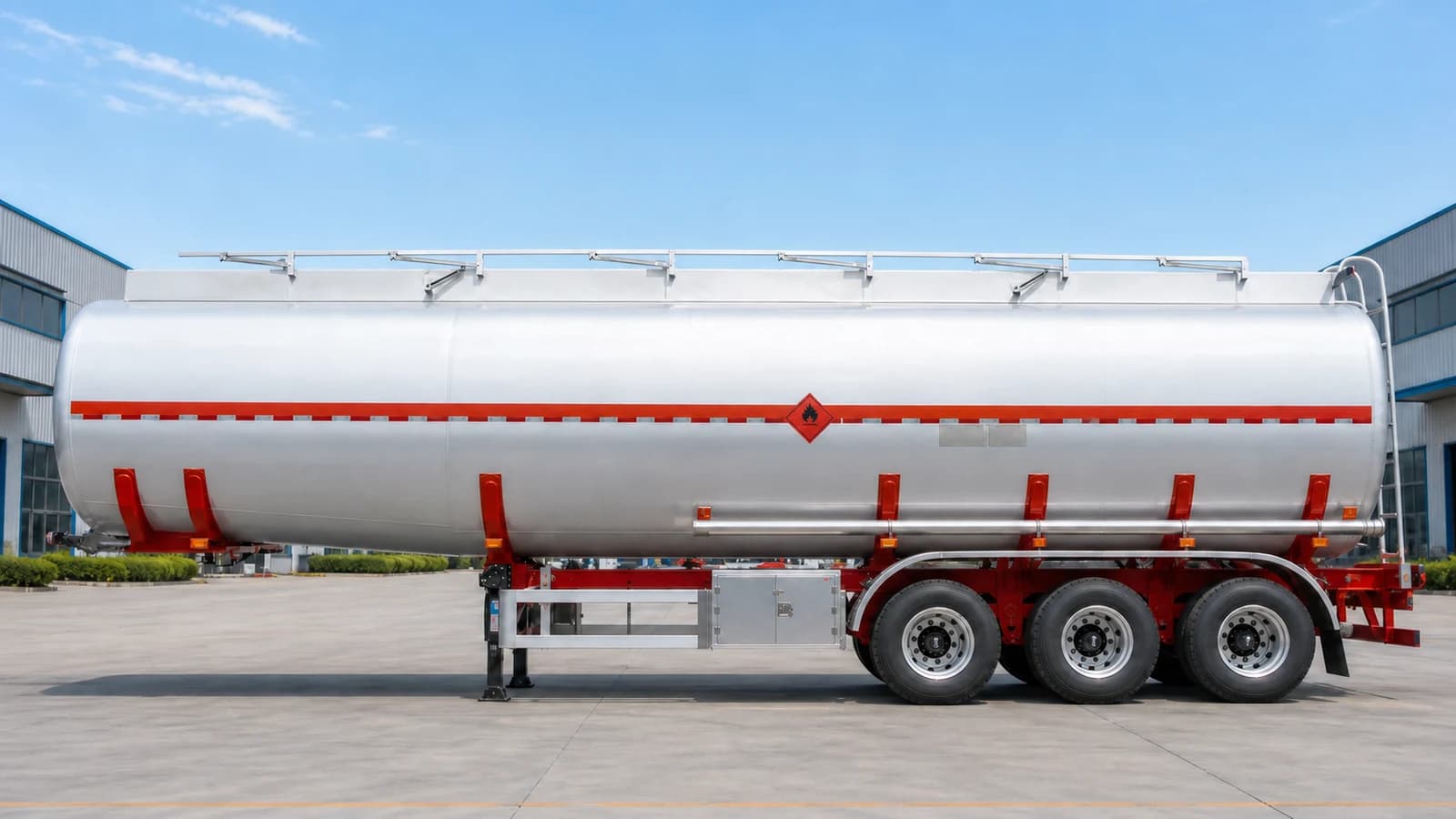
Six categories, and the cargo picks one
Our tank equipment splits into liquid tankers, dry bulk and cement tankers, bitumen and hot-product tankers, LPG and pressure gas tankers, cryogenic tankers, and tank containers. These are not trim levels of one another. Moving between them changes the vessel, not the options list, and there is no configuration path from one to the next after the shell is rolled.
So the first question is not how many cubic metres. It is what the product is, at what temperature, at what pressure, and how it comes out at the far end. Answer those four and the category is usually already decided; volume then gets fitted to whatever the axle-load limit in your market leaves available.
Compartments are an operating decision
One product per trip means one compartment and the simplest tank you can buy. Two grades on the same unit means a compartment layout, a separate discharge path per compartment, and a loading system that can prove which compartment received what. That is worth specifying when a depot run delivers two fuels to the same customer, and worth refusing when it does not, because every bulkhead is weight and every extra discharge line is a maintenance item.
The code the vessel is stamped to is chosen before it is built
For a pressure vessel, the acceptance standard in the country of registration decides how the tank is designed, fabricated, tested and stamped. It is not paperwork that can follow the vehicle: a vessel built to one code cannot be re-certified to another on arrival, and a tank that cannot be registered is not a tank that can be put to work. Tell us the registration market before the design is released, not after the unit is finished.
Discharge is the other item that is sized rather than selected. A cement tanker that has to lift powder into a tall silo needs a compressor and discharge line sized for that lift; the same tank with an undersized compressor still holds the volume and still cannot unload on site.
What the cargo decides before volume is discussed
| Cargo | Category | What actually drives the specification |
|---|---|---|
| Petrol, diesel, edible or chemical liquids at ambient | Liquid tanker | Shell material, compartment layout, and whether loading is top or bottom |
| Cement, fly ash, flour and other dry powders | Dry bulk and cement tanker | Discharge lift height, which sizes the compressor and the line |
| Bitumen and products that must stay hot | Bitumen and hot-product tanker | Insulation and heating, sized for the time the product spends in transit |
| LPG and other gases under pressure | LPG and pressure gas tanker | The pressure-vessel code accepted where the tank is registered |
| LNG, oxygen, nitrogen and other cryogenic liquids | Cryogenic tanker | Vacuum insulation and hold time, which is a design property not an option |
| Any of the above, but moving by ship or rail as well as road | Tank container | Frame to ISO container dimensions, so it can be handled as a container |
From a delivered order
50 m³ LPG pressure vessel semi-trailer. Vessel built and stamped to ASME Section VIII so the tank could be registered locally, with a sunshield and heat-derated relief valves for summer ambient — the code decision and the climate decision both had to be made before fabrication started.
Categories covered
- Liquid Tanker Semi-trailers
- Dry Bulk & Cement Tankers
- Bitumen & Hot-product Tankers
- LPG & Pressure Gas Tankers
- Cryogenic Tankers
- Tank Containers
These guides describe how we configure equipment and are written by the manufacturer. They are not a substitute for your own registration check: axle-load limits, dimensions and pressure-vessel acceptance are set by the authority in the country of registration, and we confirm them per order rather than in a published page.